Blue whale
The blue whale is the largest animal known to have lived. It filters tiny krill from huge mouthfuls of seawater.
Key numbers
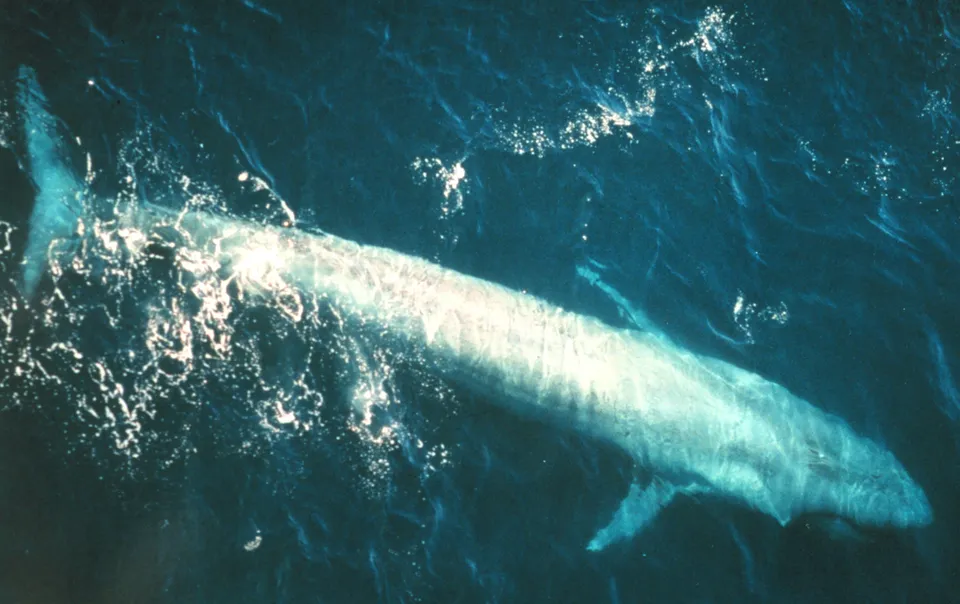
Scientific name: Balaenoptera musculus
| Length | 25–33.5 m (82–110 ft)(animaldiversity.org) |
|---|---|
| Weight | up to 149.7 metric tons (165 US tons)(fisheries.noaa.gov) |
| Lifespan (wild) | 80–90 years(fisheries.noaa.gov) |
| Top speed | up to 48 km/h (30 mph)(animaldiversity.org) |
| Diet | Blue whales feed almost entirely on krill, taking enormous amounts, and only occasionally eat small fish or copepods.(fisheries.noaa.gov) |
| Habitat | Ocean: All oceans except the Arctic.(fisheries.noaa.gov) |
| Conservation status | Endangered(animaldiversity.org) |
Sources give different figures for some of these numbers; we show the range they support.
Our full blue whale profile is on the way. Meanwhile, see it next to a person, to scale.