What Do Axolotls Eat? Wild Diet vs Pet Diet
Quick Answer
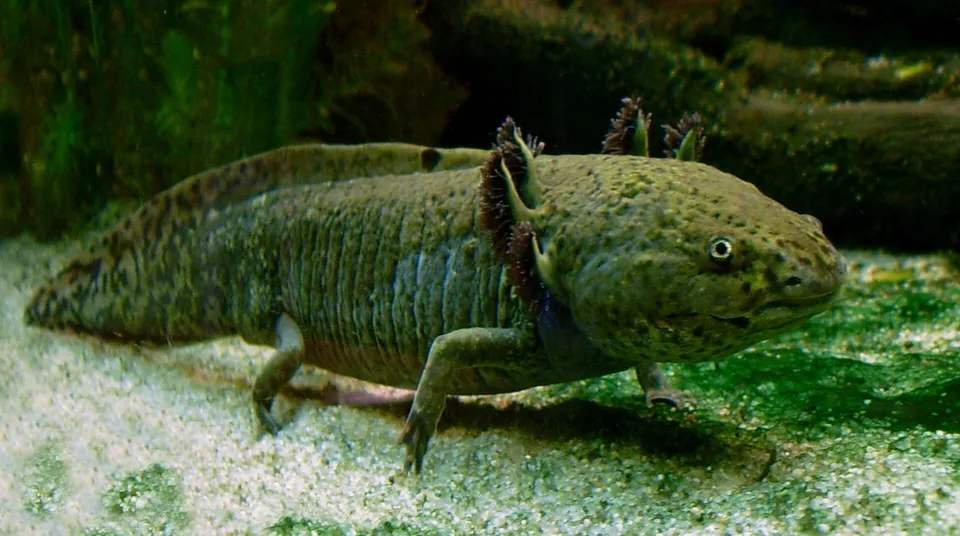
Axolotls are carnivores. In the wild they eat whatever small animals they can catch, including worms, insects, snails, small fish and tiny water animals called zooplankton. Pet and lab axolotls eat what their keepers choose: live brine shrimp as larvae, then pellets, earthworms and similar foods as they grow.
On this page
Key Takeaways
- Axolotls are carnivores and top predators in their native lake, eating worms, insects, snails, fish, other amphibians and zooplankton.
- Wild diet is poorly studied, so most feeding detail comes from labs and keepers, not from field surveys.
- One university lab feeds live brine shrimp to larvae, then pellets from about 4 cm (1.5 in), and cuts adults back to three or four feedings a week.
- Introduced fish now compete with axolotls in their home waters, which makes diet a conservation issue too.
- For a specific pet, ask a veterinarian with amphibian or exotic animal experience.
What do axolotls eat in the wild?
The axolotl is a carnivore and a top predator in its natural environment, and it eats whatever it can catch. Animal Diversity Web, run by the University of Michigan, lists amphibians, fish, insects, mollusks, terrestrial worms and zooplankton, and says the diet includes other axolotls [1].
That list is broad on purpose. The axolotl is an opportunist: it is not tied to one prey type, and what it eats depends on what is in the water.
There is a second reason the wild diet is hard to describe. The species is now very rare where it evolved. A 2022 research review calls the axolotl critically endangered and near extinction in its native Mexico, and notes that most laboratory lines trace back to just six animals brought to Paris in 1863 [6]. So most of what people know about axolotl feeding comes from animals raised in labs and homes, not from watching wild ones. Its native range is tiny. The species historically lived in Lakes Chalco and Xochimilco in the Valley of Mexico, near Mexico City, at roughly 2,274 m (7,460 ft) above sea level. Lake Chalco is gone, and Xochimilco survives only as scattered canals and swamps [1].
An honest limit: detailed wild stomach-content surveys are scarce. A study of Xochimilco compared axolotls with two introduced fish, carp and tilapia, using gut contents and chemical tracers. It found the axolotl had a more varied diet and sat higher in the food web than the introduced fish [5]. We do not give percentages for prey types, because no source we could open provides reliable ones.
What do baby axolotls and juveniles eat?
Wild axolotls breed generally from March to June. A female lays 100 to 300 eggs, one at a time, attached to rocks or plants, and the eggs hatch in 10 to 14 days. There is no parental care after the eggs are laid [1]. Newly hatched larvae are tiny, so they can only take very small prey. We found no source that documents exactly what wild larvae eat, so we do not describe it in detail.
For axolotls kept in human care, the picture is clearer. The University of Kentucky Ambystoma Genetic Stock Center, which keeps axolotls for research, feeds newly hatched live brine shrimp to young larvae daily. It starts pellets once larvae are about 4 cm (1.5 in) long, and moves to 5 mm pellets when the animals reach about 15 cm (6 in) [2].
Another lab page from the same center notes that if a mostly live diet is used, pellets are a good backup when live food is not available [3].
What do adult pet and lab axolotls eat?
The Kentucky guide says juvenile and adult axolotls accept a wide variety of foods. Besides pellets, it lists Daphnia (water fleas), mosquito larvae, earthworms ("a favorite") and pieces of beef liver or heart [2]. That is one lab's practice, not a rule for every home aquarium.
Research on diet and growth is limited but useful. In a 15-week study at Liverpool John Moores University, juvenile axolotls were fed bloodworms only, Daphnia only, or an alternating mix. They grew fastest on bloodworms, slowest on Daphnia, and at an in-between rate on the mix. The authors concluded that mixed diets in themselves may not be beneficial for growth or welfare [4]. Note what this does and does not say: it measured growth over 15 weeks in juveniles, and it did not test long-term health or whether one food is complete on its own.
Because needs differ by age, size and health, ask a veterinarian with amphibian or exotic animal experience what to feed a specific pet. We do not recommend brands or products.
How often do axolotls eat?
Frequency changes with age. The Kentucky guide feeds larvae daily and drops adults to three or four feedings a week once they are about one year old [2]. Axolotls reach sexual maturity at about one year [1], so that one-year mark is a natural turning point.
The Liverpool study also watched behavior. Feeding and locomotion were more frequent, and resting less frequent, on days when the juveniles were fed, whichever diet they were on [4]. In plain terms, a feeding day is an active day for an axolotl, which is one more reason keepers follow a steady routine.
We found no source that gives a wild feeding schedule, and none that gives a safe portion size for pets. Amounts depend on the animal, so treat any exact "grams per day" figure from a non-expert source with caution.
| Life stage | Example lab feeding (University of Kentucky) |
|---|---|
| Young larvae | Newly hatched live brine shrimp, daily |
| Larvae about 4 cm (1.5 in) | Pellets begin, alongside live food |
| About 15 cm (6 in) | 5 mm pellets |
| About 1 year and older | Pellets or varied foods, three or four times per week |
What else do axolotls need besides food?
Food works together with water. The Kentucky guide says a half gallon (2 L) of water per axolotl is adequate when the animal is fully covered and the water is changed often, and gives a rule of thumb of two adults in a ten-gallon (38 L) aquarium [2]. It also notes that even axolotls that keep their gills develop lungs, which is why you may see one gulp air at the surface.
These numbers describe one research lab, so treat them as an example and not as care instructions. A veterinarian with amphibian experience can tell you what suits your own animal, its tank and its water.
How do wild and pet axolotl diets differ?
The biggest difference is choice. A wild axolotl takes what the lake offers. A pet axolotl eats what a person provides, so the food is steadier and the prey types are fewer. Water also differs: the Kentucky lab keeps its axolotls at 15 to 18 C (60 to 65 F) and says they should not be kept above about 22 C (72 F) [2].
Wild axolotls also face a threat that pets do not. Large fish were introduced to their lakes and prey on axolotls, and habitat loss and these fish are the main threats [1]. Introduced carp and tilapia also use the same food web [5]. Food, space and safety all shrink together, which is part of why the species is Critically Endangered on the IUCN Red List [7]. Learn more on our conservation page, and see where the species lives in the rivers and lakes habitat.
For the rest of the animal, our axolotl facts page covers size, range and life cycle, and the size comparison tool shows how small an axolotl is next to a person. If you want to compare feeding styles, our diet pages for ocean animals, such as what octopuses eat and what sea turtles eat, show how different a freshwater salamander's menu is from theirs.
Frequently Asked Questions
Do axolotls eat each other?
Animal Diversity Web lists other axolotls among the animals that prey on axolotls and among the foods they eat [1]. The Kentucky lab keeps adults in separate bowls [2]. Ask a veterinarian before housing axolotls together.
Are axolotls carnivores?
Yes. Animal Diversity Web describes them as carnivores that are top predators in their natural environment [1].
Is one food enough for an axolotl?
In the Liverpool John Moores study, a mixed diet was not shown to be better than a single high-quality food for growth or behavior, but the study ran only 15 weeks in juveniles [4]. Ask a veterinarian with amphibian experience about your axolotl's overall diet.
Our Take
We think the most useful thing a reader can take from the research is humility about what is known. The wild diet of the axolotl is described in broad strokes, because few field studies exist, and the best-documented feeding advice comes from research labs. That is good information, but it describes one setting, and the wild picture is only partly known. For a pet, we would rather you ask a veterinarian with amphibian experience than copy a chart, because age, size and health change the answer. For the wild animal, the bigger story is not what it eats but how little habitat is left. Compare it with other animals in our animal vs animal tool, or browse all animals.
Sources
- Ambystoma mexicanum (Mexican axolotl). Animal Diversity Web.
- Guide to Axolotl Husbandry. University of Kentucky Ambystoma Genetic Stock Center.
- Food. University of Kentucky Ambystoma Genetic Stock Center.
- Are mixed diets beneficial for the welfare of captive axolotls (Ambystoma mexicanum)? Effects of feeding regimes on growth and behavior. Slight, Nichols and Arbuckle, 2015.
- Food web overlap among native axolotl (Ambystoma mexicanum) and two exotic fishes: carp (Cyprinus carpio) and tilapia (Oreochromis niloticus) in Xochimilco, Mexico City. Zambrano, Valiente and Vander Zanden, 2010.
- The amazing and anomalous axolotls as scientific models. Adamson, Morrison-Welch and Rogers, 2022.
- Red List search: Ambystoma mexicanum. IUCN.
Animal sizes and lifespans vary between populations, and between the wild and human care; we give ranges with sources. Spotted an error? Tell us.
Keep Exploring
Axolotl Facts: The Salamander That Never Grows Up
Axolotl facts: size, gills, where they live, how long they live, why they regenerate, and why this salamander is critically endangered in the wild.