What Do Orcas Eat? Diet by Population
Quick Answer
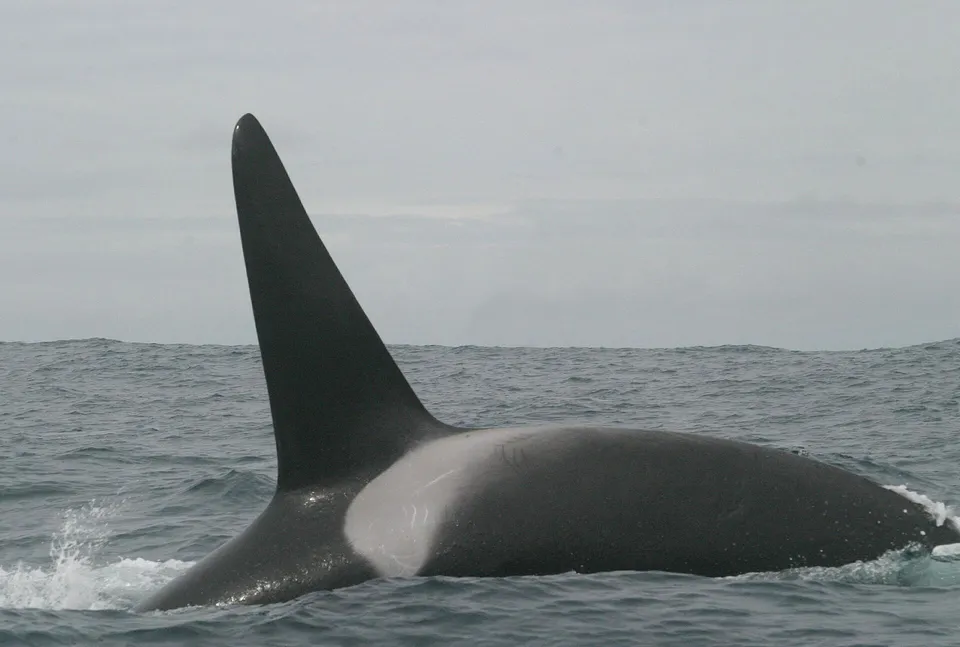
Orcas eat different foods depending on which population they belong to. Resident orcas eat mainly fish, especially salmon. Bigg's (transient) orcas eat mostly marine mammals such as seals, sea lions and porpoises, plus squid. Offshore orcas eat fish, including sharks. Hunting habits are learned within each family and passed down.
On this page
- Why do orcas eat such different foods?
- What do resident orcas eat?
- What do Bigg's (transient) orcas eat?
- What do offshore orcas eat?
- What do orcas eat in other parts of the world?
- How much do orcas eat in a day?
- Why does the orca's food supply matter for conservation?
- Frequently Asked Questions
- Our Take
- Sources
Key Takeaways
- There is no single "orca diet": NOAA says diet is mostly set by the culture, meaning learned hunting tactics, of each ecotype.
- Residents eat mainly fish (Southern Residents prefer Chinook salmon), Bigg's orcas eat mainly marine mammals and squid, and offshore orcas eat fish including sharks.
- Orcas hunt as a team, and a typical orca eats about 45 kg (100 lb) of food a day, according to Animal Diversity Web.
- Southern Resident orcas are endangered, and a shortage of their preferred salmon is one of the main concerns for their recovery.
Why do orcas eat such different foods?
An orca is the largest member of the dolphin family, and it is found in every ocean. Adults are big: females average about 7 m (23 ft) and males about 8 m (26 ft), with the largest males reaching up to 9.75 m (32 ft) [4]. That size could suit many kinds of prey, but each group tends to stick to a small menu.
The reason is learning. NOAA Fisheries says an orca's diet is primarily determined by the culture of its ecotype, meaning the hunting tactics that families learn and pass on. [1]. Because these tactics are learned rather than built in, a salmon-eating family and a seal-hunting family can share the same coast and still live on different food.
Scientists call these groups ecotypes. Off the Pacific coast of North America, three are well known: residents, Bigg's (also called transient) orcas, and offshore orcas. The sections below take them one at a time, then look at orcas elsewhere in the world, how much they eat, and why food supply matters for the animals that are in trouble.
Diet is also hard to observe directly, because so much of an orca's feeding happens underwater. Animal Diversity Web notes that orca diets are mostly assessed from stomach contents, and NOAA's newer work relies on DNA from fecal samples. That means the lists of prey you read in any source are a record of what researchers have been able to confirm, not a complete menu.
What do resident orcas eat?
Resident orcas eat mainly fish, and salmon is the main food [1]. The best studied residents are the Southern Residents, which live in the waters of the Pacific Northwest. NOAA notes that they prefer Chinook salmon, some of which are themselves threatened or endangered.
How do researchers know? They follow the whales along the coast and collect prey remains and fecal samples, then identify the fish from DNA. NOAA scientists analyzed more than 150 prey and fecal samples collected from 2004 to 2017 and found that Southern Residents prey almost exclusively on Chinook salmon in summer when the fish are available. In the rest of the year they eat a wider mix, including skates, halibut and lingcod, plus steelhead, chum and coho salmon [2].
Not every resident group eats the same salmon in the same amounts. A NOAA comparison of Southern Residents with residents in southern Alaska found very similar diets that include Chinook, chum and coho. The Southern Residents rely more on Chinook, especially in summer, while the Alaska residents eat more chum and coho at that time [3].
What do Bigg's (transient) orcas eat?
Bigg's orcas eat a more varied diet that is built around animals rather than fish. NOAA lists seals, sea lions, porpoises, dolphins, other whales and squid, and says their prey is primarily marine mammals and squid [1].
Hunting these animals takes coordination. NOAA describes orcas as using a coordinated strategy and working as a team to catch prey, which it compares to a pack of wolves. Animal Diversity Web adds that orcas are social hunters that use communication within the group to take prey larger than themselves, and that pod members may share prey [4]. Smaller prey is swallowed whole, and larger prey is torn into pieces before it is eaten.
Sound matters too. NOAA notes that orcas rely on underwater sound to feed, communicate and navigate, which is one reason boat and industrial noise affects them. Where vessels are present, NOAA says killer whales hunt less and travel more.
What do offshore orcas eat?
Offshore orcas eat fish, including sharks [1]. They are generally smaller than the other types and range up to 9 miles offshore, so they are seen far less often than residents or Bigg's orcas, and less is written about what they eat. For that reason we describe them only as far as NOAA does, and we do not guess at proportions or favorite prey beyond what the agency states. If you want to read about other ocean predators that eat fish, see what sharks eat.
What do orcas eat in other parts of the world?
The three groups above are only one region. NOAA gives several other examples of local specialties:
| Region | Typical prey (NOAA Fisheries) |
|---|---|
| Norway | Herring and other schooling fish |
| Northeast Atlantic | Herring and seals |
| New Zealand | Stingrays and sharks |
| Antarctica | Minke whales, seals or Antarctic toothfish |
The pattern holds everywhere: each local group has a favorite food and a set of hunting methods. A herring specialist in Norway and a seal hunter in Antarctica are the same species, but they would barely recognize each other's menus. Across all groups, Animal Diversity Web lists seals, sea lions, smaller whales and dolphins, fish, sharks, squid, octopuses, sea birds and sea otters among the prey that have been recorded, and notes that diet is hard to study and is mostly assessed from stomach contents [4]. Because orcas are the largest dolphins, you can compare them with their smaller relatives in what dolphins eat.
How much do orcas eat in a day?
Animal Diversity Web gives an average of 45 kg (about 100 lb) of food per day, and says an orca can eat much more [4]. That is an average for the species, not a rule for every animal on every day. NOAA does not give a daily amount on its species page, and the real figure depends on the orca's size, age and the type of prey. A salmon-eating orca needs many fish to reach it, which helps explain why prey shortages matter so much.
Why does the orca's food supply matter for conservation?
The diet of a population is also its weak point. NOAA says Chinook salmon stocks are lower than historic levels, and that overfishing and habitat loss have reduced prey. The agency says this puts Southern Residents at risk of lower reproduction and higher mortality, and that recovering salmon is a major part of the recovery plan. The Southern Resident population is listed as endangered under the Endangered Species Act. About 75 of these whales remained in 2021 [2].
Boats matter as well as fish. NOAA says that increased vessel noise causes Southern Residents to call louder, which uses more energy, and that vessels can disturb feeding, communication and orientation. NOAA also points out that land-based whale watching reduces boat traffic and underwater noise.
All orca populations are protected under the Marine Mammal Protection Act [1]. Federal rules make it illegal to feed a Southern Resident orca or to approach one within 200 yards, and in Washington inland waters it is prohibited to approach any killer whale within 200 yards. NOAA advises watching any marine mammal from at least 100 yards away. For more about threats to ocean wildlife, see conservation, or browse the orca hub and the wider ocean habitat pages.
Frequently Asked Questions
Do orcas eat humans?
The NOAA and Animal Diversity Web diet descriptions we reviewed do not list people among orca prey. They cover fish, squid and marine mammals. Wild orcas should still be watched from a distance, and it is illegal to feed them.
Are orcas whales or dolphins?
They are dolphins, the largest members of the dolphin family, though people often call them killer whales. NOAA uses the name killer whale on its species pages.
Do all orcas eat fish?
No. Residents and offshore orcas eat fish, but Bigg's orcas eat mainly marine mammals and squid, according to NOAA. Which food an orca eats is learned from its family.
How do scientists know what orcas eat?
They use several methods. NOAA researchers follow the whales and collect fecal samples, then identify the prey fish from DNA. Animal Diversity Web says diets are also assessed from stomach contents, which is how many prey records were first built.
Do orcas eat sharks?
Some do. NOAA says offshore orcas eat fish including sharks, and orcas in New Zealand eat stingrays and sharks. Many other orcas never eat sharks.
Our Take
We think the most useful fact about orcas is that "what do orcas eat" has no single answer. A resident chasing salmon and a Bigg's orca hunting seals share a species name, but they live almost like different animals, which is why we organized this page by population instead of by prey list. Based on the NOAA material we cite, the practical message is about salmon: the prey that Southern Residents prefer is the same fish that people and rivers depend on. We also want to be clear about limits. Offshore orca diets are described only briefly in the sources we use, and daily food amounts come from an older reference, so treat those figures as general averages.
Sources
- Killer Whale. NOAA Fisheries, 2025.
- Diversity of Fish Species Support Killer Whale Diet Throughout the Year. NOAA Fisheries, 2021.
- Comparing Killer Whale Cuisine. NOAA Fisheries, 2024.
- Orcinus orca (killer whale). Animal Diversity Web, 2009.
Animal sizes and lifespans vary between populations, and between the wild and human care; we give ranges with sources. Spotted an error? Tell us.
Keep Exploring
What Do Octopuses Eat? Diet, Hunting and Baby Food
What do octopuses eat? See the diet of the giant Pacific and common octopus, what baby octopuses eat, and how they open shells, with sources cited.
Octopus Facts: Three Hearts, Blue Blood, and More
Octopus facts for curious readers and students: why they have three hearts and blue blood, how big they get, how long they live and how they hide.
What Do Sea Turtles Eat? Diet by Species
Sea turtles eat different foods by species: seagrass, jellyfish, sponges, crabs and more. See what each kind eats, from hatchling to adult, with NOAA sources.
What Do Dolphins Eat? Fish, Squid and How They Hunt
Dolphins eat fish, squid and crustaceans. Learn how much a bottlenose eats a day, how dolphins find and catch food, and what calves eat, with sources.
Dolphin Facts: Intelligence, Pods, and Echolocation
Dolphin facts with sources: size, lifespan, echolocation, pods, calves and intelligence, plus where dolphins live and how U.S. law protects them.
What Do Sharks Eat? From Plankton to Seals
What sharks eat depends on species and age: filter feeders sift plankton, nurse sharks eat small fish, great whites hunt seals. Sourced diet and feeding facts.