What Do Sharks Eat? From Plankton to Seals
Quick Answer
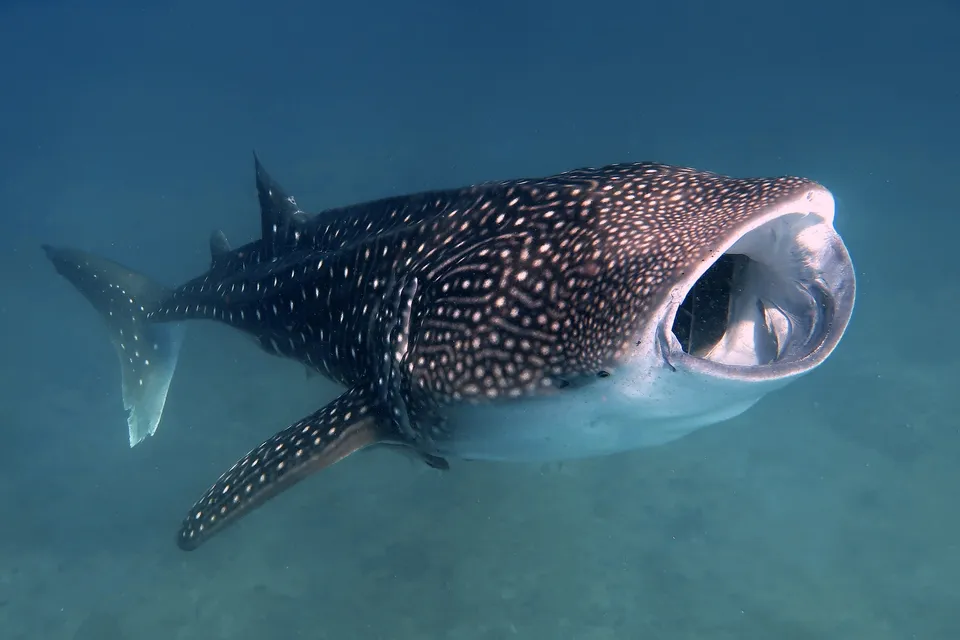
What sharks eat depends on the species and on age. Most are predators that eat fish, squid and rays, and large species such as the great white also eat seals and sea lions. A few giants, including the whale shark and basking shark, filter tiny drifting animals from the water instead, and many sharks change their diet as they grow.
On this page
- What Do Different Kinds of Sharks Eat?
- What Do Baby and Young Sharks Eat?
- How Do Great White and Tiger Sharks Hunt and Scavenge?
- How Do Whale Sharks and Basking Sharks Filter Feed?
- What Do Bottom-Dwelling and Estuary Sharks Eat?
- How Much and How Often Do Sharks Eat?
- What Do Sharks Eat in Aquariums, and Should People Feed Wild Sharks?
- Frequently Asked Questions
- Our Take
- Sources
Key Takeaways
- Most sharks are predators near the top of their food chains, but a few filter plankton instead.
- Diet changes with age: young great whites eat fish and rays, while large adults mostly eat seals and sea lions.
- Nurse sharks eat mostly small bony fish, which made up about 89% of stomach contents in one study.
- Estimates of how long one large blubber meal lasts a great white range from about 12 to 15 days up to about 44 days, depending on the study.
- For the animal itself, see our shark facts page.
What Do Different Kinds of Sharks Eat?
There are more than 450 shark species by NOAA's count, and no single menu fits them all [1]. Monterey Bay Aquarium puts it simply: shark food varies from species to species, with some eating marine mammals, others mostly fish and basking sharks filtering tiny plankton [8]. Here is how six well-studied sharks compare.
| Shark | Main foods | How it feeds |
|---|---|---|
| Great white | Fish, rays and smaller sharks when young; seals and sea lions as adults | Short bursts of speed from an ambush |
| Tiger shark | Mollusks, birds, snakes, crustaceans, sea turtles, fish and carrion | Stealth hunting, mostly at night |
| Bull shark | Catfish, stingrays, blue crabs, menhaden and mullet | Forages near the bottom of coastal waters |
| Nurse shark | Small bony fish, squid and octopus, crustaceans | Suction feeding at night |
| Whale shark | Krill, crab larvae, jellyfish, sardines, anchovies and squid | Filter feeding |
| Basking shark | Small zooplankton such as copepods | Filter feeding, mouth open |
The table draws on NOAA Fisheries and Animal Diversity Web species pages [2] [3] [4] [5] [6] [7]. The whale shark is the largest living fish, yet it eats some of the smallest prey in the ocean. For body size and other biology, see our shark facts page. People are not on any of these menus, and bites are rare: the Florida Museum's International Shark Attack File reports about 61 unprovoked bites a year worldwide on average from 2020 to 2024 [12].
What Do Baby and Young Sharks Eat?
Diet often changes with age, and the best documented example is the great white. NOAA says juveniles feed mainly on bottom fish, smaller sharks and rays, and schooling fish and squid, while adults have a diverse, opportunistic diet of fish, invertebrates and marine mammals [2]. Monterey Bay Aquarium describes the same shift: young white sharks move from skates, rays and schooling fishes toward marine mammals as they grow [9].
Other sharks follow their own patterns. Young bull sharks eat mainly ray-finned fish and shift toward other sharks and rays as they grow, and they spend their early years in estuaries that serve as nurseries [4]. Tiger shark pups weigh 3 to 6 kg (7 to 13 lb) at birth and arrive with teeth suited to catching prey, though our source does not describe a separate juvenile menu [3]. Whale sharks also change: juveniles eat more open-water prey, and larger individuals take larger prey [6].
How Do Great White and Tiger Sharks Hunt and Scavenge?
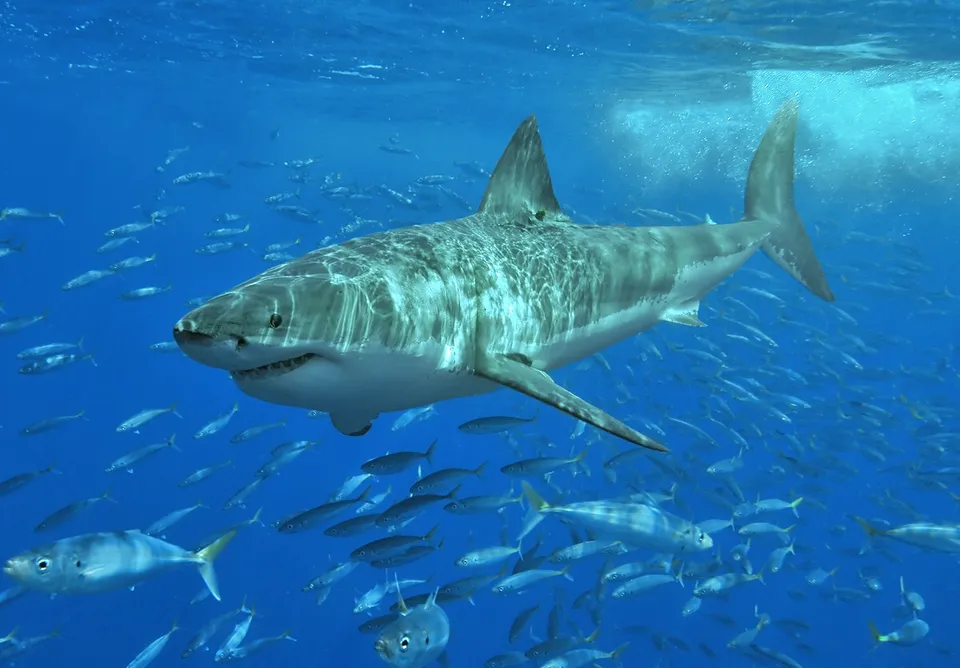
Great whites are best known for eating seals and sea lions. Monterey Bay Aquarium says large white sharks dine mostly on pinnipeds, the group that includes seals and sea lions, using quick bursts of speed to ambush favored prey [9]. NOAA notes that larger sharks often gather around seal and sea lion colonies and occasionally scavenge dead whales [2]. Their broad, serrated triangular teeth pierce and hold slippery prey.
Tiger sharks have the widest menu of the group. Animal Diversity Web lists mollusks, birds, snakes, crustaceans, sea turtles, fish and carrion, and says they often feed on dead or injured whales. They are mostly nocturnal and hunt by stealth, using camouflage to get within range and usually backing off if prey escapes. Their serrated teeth can tear flesh and crack the shells of prey, including sea turtle shells. At carcasses, larger sharks feed first while smaller ones wait nearby [3]. Scavenging matters in the ocean, because it returns the energy in large dead animals to the food web. For other marine animals with specialized diets, see what orcas eat and what sea turtles eat.
How Do Whale Sharks and Basking Sharks Filter Feed?
Filter feeders are sharks that sift tiny animals from the water. Animal Diversity Web lists the whale shark's prey as krill, crab larvae, jellyfish, sardines, anchovies, mackerel, small tuna and squid. Its mouth can be up to 1.5 m (5 ft) across, yet the gill slits are internally modified into filtration screens, with gill rakers that can sift prey as small as 1 mm. Its many tiny teeth appear to play little or no role in feeding [6].
Basking sharks filter in a similar way. They swim with their mouths open and close their jaws every 30 to 60 seconds, and gill rakers 10 to 12 cm (4 to 5 in) long strain plankton from water taken in through five large gills. Animal Diversity Web gives an average of 6,000 liters (about 1,590 gallons) of water filtered per hour, and notes that basking sharks feed along thermal fronts where zooplankton is dense [7]. Filter feeding lets the two largest sharks live on food that would not satisfy a hunter of seals.
What Do Bottom-Dwelling and Estuary Sharks Eat?
Not every shark hunts in open water. Nurse sharks are described as obligate ocean floor feeders that suction-feed on prey within about 3 cm (1 in) of the mouth. They forage and ambush mostly at night, push their snouts into crevices, and find food partly by smell. In one study cited by Animal Diversity Web, small bony fish made up about 89% of stomach contents [5].
Bull sharks hunt coastal waters and are famous for tolerating fresh water. Adults commonly eat catfish and stingrays, and sometimes blue crabs, menhaden and mullet. Animal Diversity Web calls the bull shark the only shark species that can tolerate prolonged periods in freshwater, and young sharks use estuaries as nurseries [4]. Rivers and bays are part of the shark story too, so see our ocean habitat guide for the wider picture.
How Much and How Often Do Sharks Eat?
There is no single answer, and our sources give no reliable per-day figure for most species. The whale shark page does not state an amount eaten, and Animal Diversity Web notes only that large tiger sharks can survive several weeks without feeding [3].
The best-known number comes from research on the great white. An earlier estimate, based on one shark of 943 kg (2,079 lb), suggested that 30 kg (66 lb) of marine mammal blubber could cover its energy needs for about 44 days. A 2013 study in Scientific Reports re-examined this using sharks that averaged 428 kg (944 lb) and estimated 11.6 to 14.8 days for the same amount, three to four times shorter than the earlier figure [11]. So great whites probably need to eat more often than older estimates suggested, but the result depends on the energy model used. Both numbers describe how long blubber could last, not a measured meal schedule in the wild.
What Do Sharks Eat in Aquariums, and Should People Feed Wild Sharks?
Diets in human care are managed separately from the wild, and the two should not be confused. Monterey Bay Aquarium says its sharks and rays eat fishy foods such as sardines, anchovies, squid and salmon, plus a gel diet with nutrients, algae and gelatin to replace vitamins lost in frozen food [10]. Aquarists hand-feed some sharks, because hand-feeding "helps ensure that our sharks get just the right amount of food" [8]. Wild sharks find their own food, and the great white is so specialized that the aquarium that once displayed white sharks released them and says it will not display them in the future [9]. To compare with another ocean predator, read what dolphins eat, or learn about protections for sharks and other wildlife on our conservation page.
Frequently Asked Questions
What do baby sharks eat?
It depends on the species. Young great whites eat bottom fish, smaller sharks, rays, schooling fish and squid, and young bull sharks eat mainly ray-finned fish [2] [4].
Do sharks eat plankton?
Some do. The whale shark and basking shark are filter feeders, and Animal Diversity Web lists krill and copepods among their prey [6].
What is the biggest shark's diet?
The whale shark, the largest living fish, eats krill, crab larvae, jellyfish, small schooling fish and squid, and filters them from the water [6].
Do sharks eat people?
People are not a regular item on the menus described above, and bites are rare. The Florida Museum's International Shark Attack File says the risk of being bitten remains extremely low, with about 61 unprovoked bites worldwide per year on average from 2020 to 2024 [12]. More in our shark facts.
Our Take
We find the most surprising part of shark diets is how little they match the popular picture. The two largest sharks live on plankton, many species eat small fish or crabs, and even the great white changes its menu as it grows. We also think the "how often do they eat" question shows why numbers need careful sourcing: one early estimate of weeks became a much shorter figure when researchers used better assumptions. Our advice is to watch wild sharks from a distance and never feed them. Feeding changes how an animal behaves around people, and aquarium diets exist because trained teams control the amounts.
Sources
- Sharks: Background Information. NOAA Office of National Marine Sanctuaries, 2025.
- White Shark. NOAA Fisheries, 2025.
- Galeocerdo cuvier (tiger shark). Animal Diversity Web, 2025.
- Carcharhinus leucas (bull shark). Animal Diversity Web, 2025.
- Ginglymostoma cirratum (nurse shark). Animal Diversity Web, 2025.
- Rhincodon typus (whale shark). Animal Diversity Web, 2025.
- Cetorhinus maximus (basking shark). Animal Diversity Web, 2025.
- Sharks. Monterey Bay Aquarium, 2025.
- White Shark. Monterey Bay Aquarium, 2025.
- From krill shakes to salmon steaks: a peek into our food room. Monterey Bay Aquarium, 2025.
- Feeding requirements of white sharks may be higher than originally thought. Semmens, J. M., Payne, N. L., Huveneers, C., Sims, D. W., Bruce, B. D, 2013.
- Yearly Worldwide Shark Attack Summary. Florida Museum, International Shark Attack File, 2026.
Animal sizes and lifespans vary between populations, and between the wild and human care; we give ranges with sources. Spotted an error? Tell us.
Keep Exploring
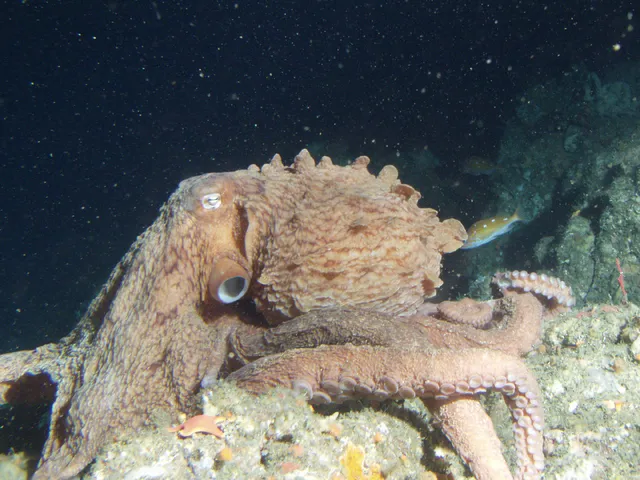
What Do Octopuses Eat? Diet, Hunting and Baby Food
What do octopuses eat? See the diet of the giant Pacific and common octopus, what baby octopuses eat, and how they open shells, with sources cited.
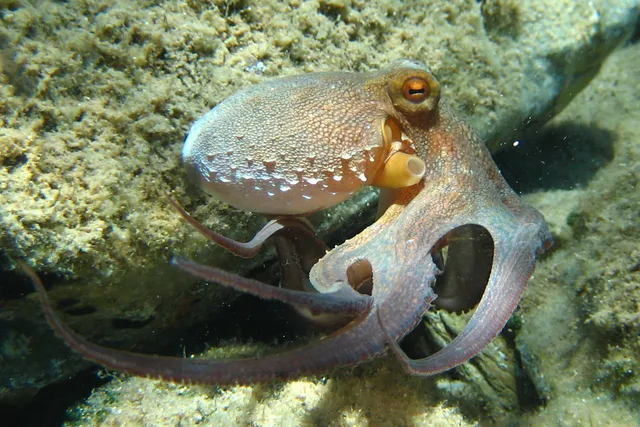
Octopus Facts: Three Hearts, Blue Blood, and More
Octopus facts for curious readers and students: why they have three hearts and blue blood, how big they get, how long they live and how they hide.
What Do Sea Turtles Eat? Diet by Species
Sea turtles eat different foods by species: seagrass, jellyfish, sponges, crabs and more. See what each kind eats, from hatchling to adult, with NOAA sources.
What Do Orcas Eat? Diet by Population
Orcas eat different foods by population: salmon, seals and other marine mammals, or fish and sharks. See each diet explained with NOAA sources.
What Do Dolphins Eat? Fish, Squid and How They Hunt
Dolphins eat fish, squid and crustaceans. Learn how much a bottlenose eats a day, how dolphins find and catch food, and what calves eat, with sources.
Dolphin Facts: Intelligence, Pods, and Echolocation
Dolphin facts with sources: size, lifespan, echolocation, pods, calves and intelligence, plus where dolphins live and how U.S. law protects them.