Shark Facts: Size, Senses, and Surprising Biology
Quick Answer
Sharks are cartilage-skeleton fish, with more than 450 species ranging from small bottom-dwellers to the 7 m (23 ft) average whale shark. They have no bones, they sense the water with smell, vibration and weak electric fields, and the great white shark can live 70 years or more. Most are predators, but a few filter tiny plankton instead.
On this page
Key Takeaways
- Sharks have skeletons made of cartilage, not bone, and they have existed for more than 400 million years.
- Sizes vary enormously: great whites are 4 to 7 m (13 to 23 ft), while the whale shark, the largest living fish, averages about 7 m (23 ft).
- Senses include smell, vibration detection through the lateral line, and electroreception that finds prey hidden in sand.
- Shark bites on people are rare: the five-year worldwide average is about 61 unprovoked bites a year.
- Diet ranges from seals to plankton; see our full guide to what sharks eat.
Shark at a glance
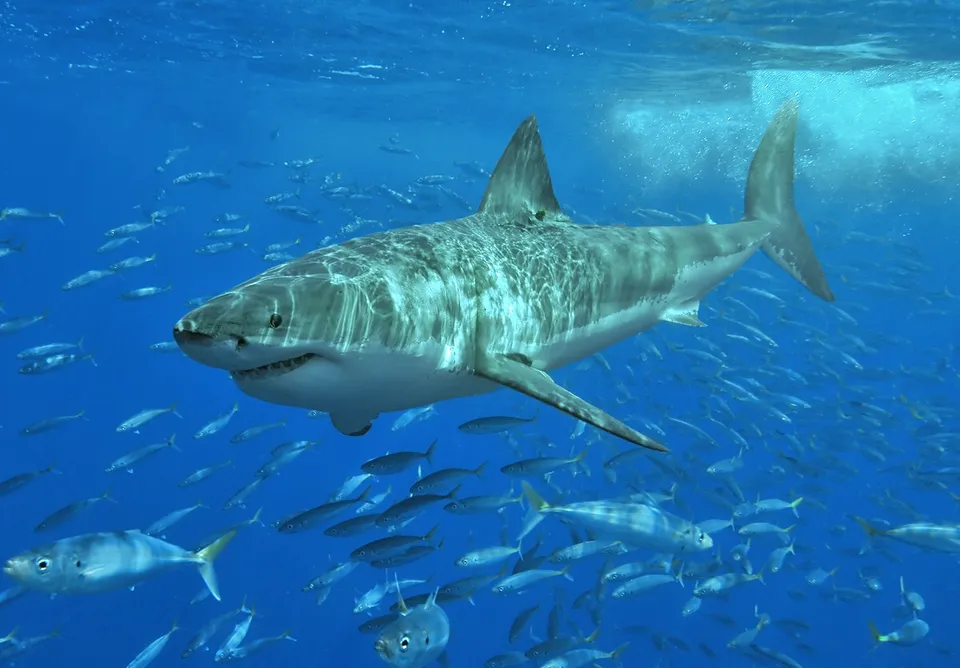
Great white shark (Carcharodon carcharias)
| Length | 4–7 m (13–23 ft)(animaldiversity.org) |
|---|---|
| Weight | up to 2 metric tons (4,500 lb)(fisheries.noaa.gov) |
| Lifespan (wild) | 30–70+ years(fisheries.noaa.gov) |
| Diet | Young sharks eat fish, squid, rays and smaller sharks. Adults hunt seals and sea lions and also scavenge dead whales.(fisheries.noaa.gov) |
| Habitat | Ocean: Temperate and subtropical seas worldwide; in U.S. waters from Alaska to California and Hawaii, and from Maine to the Gulf and Caribbean.(fisheries.noaa.gov) |
| Conservation status | Vulnerable(animaldiversity.org) |
Sources give different figures for some of these numbers; we show the range they support.
Whale shark (Rhincodon typus)
| Length | up to 20 m (66 ft)(animaldiversity.org) |
|---|---|
| Weight | up to 30.8 metric tons (34 US tons)(animaldiversity.org) |
| Top speed | up to 4 km/h (2 mph)(animaldiversity.org) |
| Diet | It filters tiny drifting animals such as krill, fish eggs and larvae, and also takes small schooling fish and squid as it swims.(animaldiversity.org) |
| Habitat | Ocean: Warm seas roughly between 30°N and 35°S latitude, occasionally farther.(animaldiversity.org) |
Sources give different figures for some of these numbers; we show the range they support.
How Many Types of Sharks Are There, and How Big Do They Get?
NOAA's sanctuary education pages say there are more than 450 species of shark, though another section of the same page says more than 300, so "several hundred" is the safe way to put it [4]. The group is old: sharks have been around for more than 400 million years.
Size is where sharks surprise people most. The great white shark is usually 4 to 7 m (13 to 23 ft) long according to Animal Diversity Web, while NOAA gives a maximum of about 21 ft (6.4 m) and a weight of up to 4,500 lb (2,041 kg) [2] [1]. The whale shark is bigger still. Animal Diversity Web lists an average length of 7 m (23 ft) and a largest recorded length of 20 m (66 ft), a figure best read as an upper claim rather than a typical animal [3].
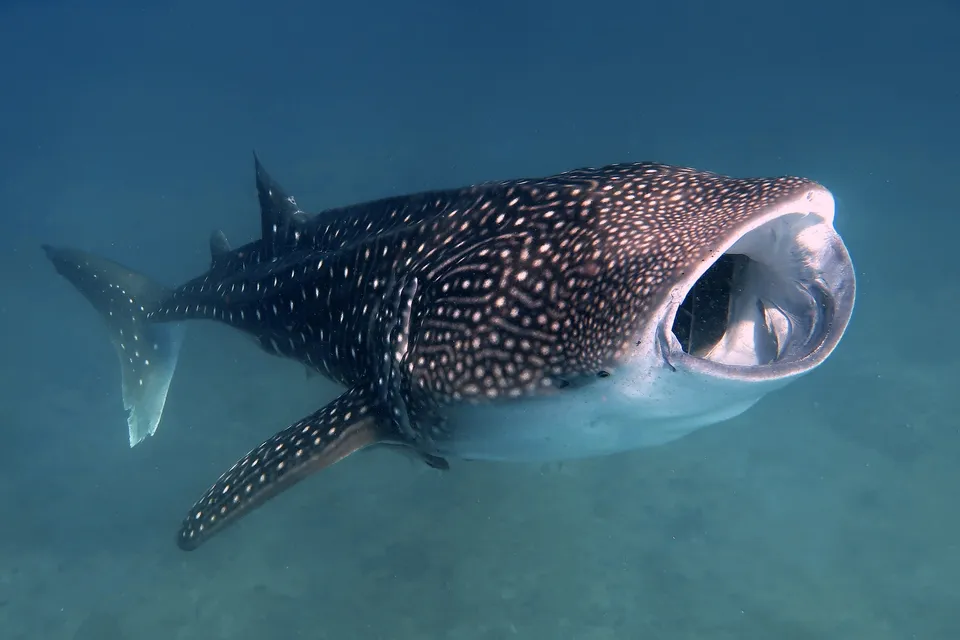
Between those two giants sit many mid-sized species. Adult tiger sharks are typically 3.25 to 4.25 m (10.7 to 13.9 ft) long, and adult nurse sharks range from 107 to 300 cm (3.5 to 9.8 ft) [7] [8]. The basking shark ranks second in size, with adults averaging 7 to 8 m (23 to 26 ft) [9]. Even the largest sharks start small: a newborn whale shark averages about 55 cm (22 in) long. The whale shark's skin shows a checkerboard-like pattern of light spots and stripes over a dark body, and the pattern stays the same through life, so researchers can use photographs to recognize individual animals.
What Makes a Shark Different From Other Fish?
The biggest difference is the skeleton. Sharks and their relatives, the rays and skates, have skeletons made of cartilage instead of bone, and their fins are supported by cartilage rods [5]. Cartilage is much lighter than bone. Sharks also lack a swim bladder, the gas-filled organ many bony fish use to stay afloat, and rely on large livers full of low-density oil for some of their buoyancy.
Their skin is covered in dermal denticles, tiny diamond-shaped scales that are similar in structure to human teeth. NOAA says they reduce drag, and designers have borrowed the idea for swimsuits and even aircraft surfaces [6].
The great white is also regionally endothermic, which means it can keep parts of its body warmer than the surrounding water [1]. Animal Diversity Web describes a streamlined, powerful body built for short bursts of speed, and notes a "pattern breach" in which a shark propels about two-thirds of its body out of the water [2].
Teeth differ widely by species. The great white has broad, triangular teeth with distinct serrations, with narrower teeth in the lower jaw [1]. The whale shark, at the other extreme, has many rows of very small teeth that appear to play little or no role in feeding.
How Do Sharks Sense the World?
Older books say sharks have six senses. NOAA now lists eight: hearing, smell, vision, touch, taste, distant touch (vibration), electrosense and magnetoreception [6]. Three stand out.
- Smell. It is the primary sense of the great white, which can detect a drop of blood in 100 liters of water [2].
- Lateral line. A row of tubes just under the skin along each side picks up pressure waves and disturbances in the water.
- Electroreception. Pores on the snout lead to the ampullae of Lorenzini, which detect weak electric fields. At close range, this helps a shark find prey that is hidden, such as a stingray buried in sand [5].
Species differ in how much they lean on each sense. Tiger sharks can detect the scent of dead prey from very long distances, while bull sharks have smaller eyes and are thought to rely less on vision than related species [5].
How Are Baby Sharks Born?
Sharks have internal fertilization, and young sharks arrive as miniature adults with no larval stage [5]. NOAA describes four ways sharks reproduce [6].
Both the great white and the whale shark are ovoviviparous, meaning the pups hatch inside the mother and rely on a yolk sac rather than a placenta. Litters can be very different. Animal Diversity Web gives two to ten great white pups in its text but two to fourteen in its data table, so the exact litter size is uncertain. A 10.6 m whale shark caught off Taiwan in 1995 carried about 304 embryos, the largest litter recorded for any shark [3].
Many sharks grow slowly and mature late. NOAA reports that male great whites mature at about 26 years and females at about 33 years, and that whale sharks may need up to 30 years, which is one reason their populations recover slowly [1] [3].
Where Do Sharks Live, and How Long Do They Live?
Sharks live in oceans around the world, from shallow coasts to deep water. The great white lives in temperate and subtropical seas, often moving to stay within roughly 50 to 80 degrees Fahrenheit (10 to 27 C). In U.S. waters it ranges from Alaska to California and Hawaii, and from Maine to the Gulf and the Caribbean [1]. The whale shark prefers warm seas roughly between 30 degrees north and 35 degrees south, and some individuals travel across entire oceans [3]. Whale sharks also dive deep, with Animal Diversity Web listing depths of more than 1,700 m (5,577 ft). Great white pups and juveniles stay in near-shore waters, and NOAA names the waters off southern California and off Long Island, New York, as nursery areas [1]. Sharks share the open ocean with other large animals such as orcas and sea turtles. For more ocean wildlife, see our ocean habitat guide or browse every animal profile.
Lifespans are hard to measure. NOAA lists 70 years or more for the great white and notes that estimates run from 30 to over 70 years. The Greenland shark is estimated to live at least 250 years, possibly more than 500 [4]. Whale shark lifespan estimates are uncertain, and Animal Diversity Web only says it may exceed 100 years based on late maturity.
What Do Sharks Eat?
Most sharks are predators near the top of their food chains, but a few, such as the whale shark, filter tiny drifting animals from the water [4]. Young great whites eat mostly fish, rays and smaller sharks, while adults also hunt seals and sea lions [1]. The full picture, from plankton feeders to bottom feeders, is in our guide to what sharks eat.
Are Sharks Dangerous to People?
Rarely. The International Shark Attack File at the Florida Museum reports that the risk of being bitten "remains extremely low." Its five-year worldwide average, for 2020 to 2024, is about 61 unprovoked bites per year, with about eight deaths per year [10].
Wild sharks should be watched from a distance and never fed or approached. Great whites are also protected in the United States: NOAA lists the species as prohibited, so none may be kept if caught, and it is listed under CITES Appendix II internationally [1]. NOAA reports that Atlantic great white abundance has reportedly been increasing since protective regulations began in the 1990s, that the northeastern Pacific population appears to be increasing, and that a 2012 status review concluded Endangered Species Act listing was not warranted [1]. Stock status in U.S. waters is still listed as unknown because no assessments have been completed. Learn more on our conservation page and in our fun facts collection.
Frequently Asked Questions
Do sharks have bones?
No. A shark's skeleton is made of cartilage. Cartilage is much lighter than bone, and rays and skates share this trait [5].
What is the biggest shark?
The whale shark. Animal Diversity Web gives an average length of 7 m (23 ft) and a largest recorded length of 20 m (66 ft), and calls it the largest living fish. The basking shark is second, with adults averaging 7 to 8 m [9].
How are sharks different from dolphins?
Sharks are fish that breathe with gills, while dolphins are air-breathing mammals. Read our dolphin facts for the other side of the comparison, or try the size comparison tool.
Our Take
We think the most useful shark fact is how wide the group is. People picture one animal, yet sharks include filter feeders, bottom-dwelling night hunters and giants measured in meters. The cautious figures in this article, such as ranges for size and lifespan, reflect real disagreement between sources, and we would rather show that than pick one number. The bite statistics matter for the same reason: they are small, and the best protection for both people and sharks is good information. In our view, curiosity from a safe distance, plus protection for slow-growing species, serves everyone best.
Sources
- White Shark. NOAA Fisheries, 2025.
- Carcharodon carcharias (great white shark). Animal Diversity Web, 2025.
- Rhincodon typus (whale shark). Animal Diversity Web, 2025.
- Sharks: Background Information. NOAA Office of National Marine Sanctuaries, 2025.
- Shark Biology. Florida Museum of Natural History, 2025.
- Fascinating Shark Facts. NOAA Fisheries, 2025.
- Galeocerdo cuvier (tiger shark). Animal Diversity Web, 2025.
- Ginglymostoma cirratum (nurse shark). Animal Diversity Web, 2025.
- Cetorhinus maximus (basking shark). Animal Diversity Web, 2025.
- Yearly Worldwide Shark Attack Summary. Florida Museum, International Shark Attack File, 2026.
Animal sizes and lifespans vary between populations, and between the wild and human care; we give ranges with sources. Spotted an error? Tell us.
Keep Exploring
What Do Octopuses Eat? Diet, Hunting and Baby Food
What do octopuses eat? See the diet of the giant Pacific and common octopus, what baby octopuses eat, and how they open shells, with sources cited.
Octopus Facts: Three Hearts, Blue Blood, and More
Octopus facts for curious readers and students: why they have three hearts and blue blood, how big they get, how long they live and how they hide.
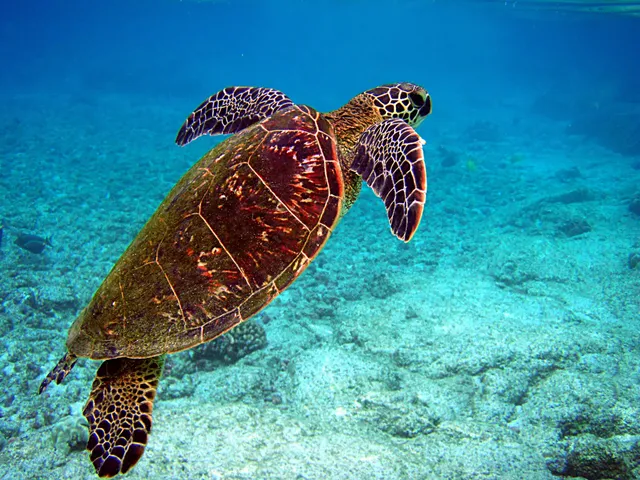
What Do Sea Turtles Eat? Diet by Species
Sea turtles eat different foods by species: seagrass, jellyfish, sponges, crabs and more. See what each kind eats, from hatchling to adult, with NOAA sources.
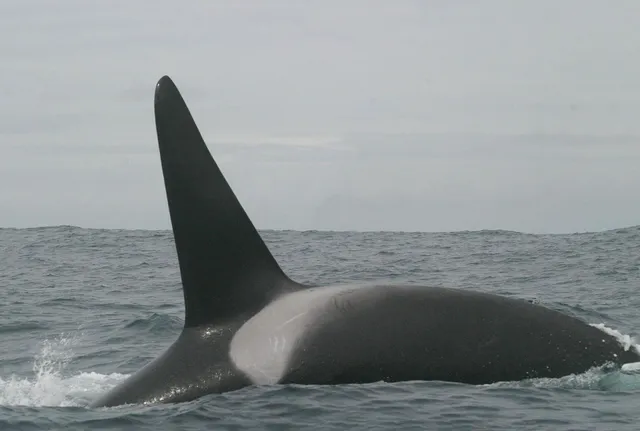
What Do Orcas Eat? Diet by Population
Orcas eat different foods by population: salmon, seals and other marine mammals, or fish and sharks. See each diet explained with NOAA sources.
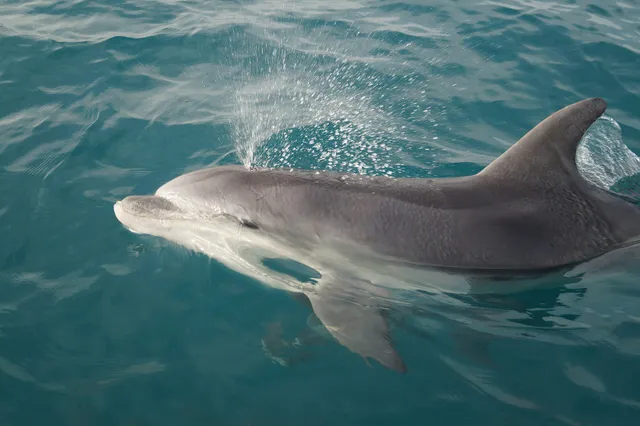
What Do Dolphins Eat? Fish, Squid and How They Hunt
Dolphins eat fish, squid and crustaceans. Learn how much a bottlenose eats a day, how dolphins find and catch food, and what calves eat, with sources.
Dolphin Facts: Intelligence, Pods, and Echolocation
Dolphin facts with sources: size, lifespan, echolocation, pods, calves and intelligence, plus where dolphins live and how U.S. law protects them.